Webb Telescope Uncovers New Forms Of Ancient Light: Galaxy Formation Rewritten. James Space Massive Cluster Surrounding
The james webb space telescope reveals surprisingly bright early galaxies, indicating they may have formed stars more rapidly than expected In this sonification, which scans from left to right, red light is assigned lower pitches and blue light is assigned higher pitches. This challenges traditional views on galaxy formation and could lead to revisions in our understanding of the universe's structure
James Webb Space Telescope Uncovers Pluto's Unexpected Climate Secret
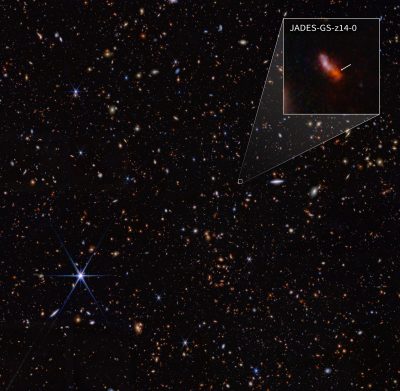
Nasa's james webb space telescope (jwst) has revealed unparalleled details about the early universe The data revealed light from one galaxy that traveled for 13.1 billion years before webb's mirrors captured it. Observations of young galaxies with unexpectedly elongated shapes that challenge established cosmological models.this discovery represents a massive leap toward a new understanding on the nature of dark matter — the invisible substance that makes up the universe's mass
- The Shocking Truth Behind St Pauls Admissions 2026 Sees Record International Surge
- Why Glen Stream Md 2026 Water Purity Results Shocked Local Experts
- New Study Reveals Unseen Link St Paul Allergy Spike Tied To Urban Green Spaces
Astronomers are also now able to study the internal structure of many of these ancient galaxies, something impossible before
Webb's fine resolution allows researchers to trace how light is distributed across each galaxy, helping to determine whether it has a bulge, spiral arms, or a disturbed shape caused by mergers or interactions. Using the james webb space telescope, scientists have charted billions of years of galactic evolution, and found that galaxies near the dawn of time were much more chaotic than they are today. In a new study, scientists at the university of missouri looked deep into the universe and found something unexpected Using infrared images taken from nasa's powerful james webb space telescope.
Webb telescope uncovers 300 unusually bright objects, potentially rewriting the story of galaxy formation in the early universe. James webb telescope's new findings challenge galaxy formation theories, suggesting rapid galaxy creation and questioning the role of dark matter. In 2022 the first deep images from webb, a telescope designed to see longer wavelengths of light, revealed little red dots in the distant universe The new results gave scientists more context into what these mysterious, compact, and very old objects could be.
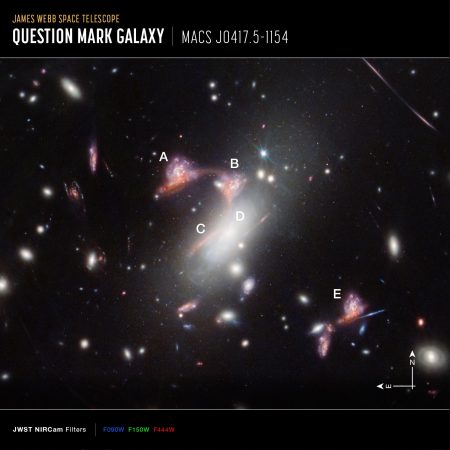
The james webb space telescope has discovered hundreds of galaxies that existed when the universe was less than 600 million years old.
The james webb space telescope has the potential to rewrite the history of the cosmos and reshape humanity's position within it But first, a lot of things have to work just right. Using the unique infrared sensitivity of nasa's james webb space telescope, researchers can examine ancient galaxies to probe secrets of the early universe. The james webb space telescope revealed galaxies from more than 13 billion years ago that seem to be as mature as the milky way is now
Something so unexpected it actually creates problems for. Nasa's james webb space telescope has revealed mysterious objects in the early universe that challenge current theories of galaxy and supermassive black hole evolution These objects contain old stars and massive black holes, much larger than expected, suggesting a rapid and unconventional form o One is a benefit of the cosmos
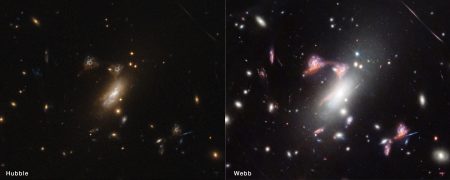
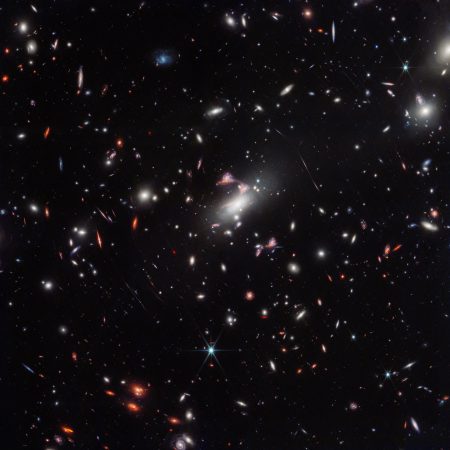
A massive foreground galaxy cluster radically enhanced the distant galaxy's appearance through a natural effect known as gravitational lensing
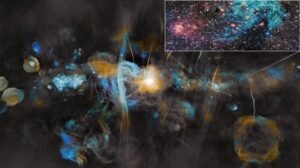
The inset at the top right zooms in on those pahs, which are represented in green. These stars are surrounded by a disk of material that feeds them as they form over millions of years. Astronomers are reveling in the james webb space telescope's discoveries about the formative epoch of cosmic history. Images of cosmic cliffs showcase webb's cameras' capabilities to peer through cosmic dust, shedding new light on how stars form objects in the earliest, rapid phases of star formation are difficult to capture, but webb's extreme sensitivity, spatial resolution, and imaging capability can chronicle these elusive events
The revelation that massive galaxy formation began extremely early in the history of the universe upends what many of us had thought was settled science, says joel leja, an astronomer and.