Historians Debate Modern Interpretations Of The Founder In Christianity Online Pptx
Abstract this chapter argues that conservative christians' retellings of the founding of the united states represent a distinct religious practice that has been influential in american politics His followers proclaimed that he was the incarnation of god and had risen from the dead. Focused on principles rather than on chronology or historical causation, the christian reading of us history emphasizes the puritans, the faith of the founding fathers, and moments of public.
Christianity and Interpretations - Faith & Science Conversation - The
What was the controversy about The history of christianity begins with jesus, an itinerant jewish preacher and teacher, who was crucified in jerusalem c The controversy centered on two opposing approaches to christian faith
- Parents Divided Over Screen Time Policy At St Paul Lutheran Daycare
- Decoding The Shift Towards Ai Integration In Every Major Non Profit Org
- New Data Reveals Surprising Academic Gains Across Schools In Glen Burnie
Fundamentalists insisted on the inerrancy of scripture and rejected modern scientific and cultural developments that contradicted traditional biblical interpretations.
He described the gospels as histories but also stated that they narrate certain events that could not have happened For most interpreters from the beginning until the modern period, however, the real world was identified with the world. This question has a long history in origen studies, tracing its origin all the way back to the modern debates about whether origen is best characterised as a hellenised (platonist) philosopher, a spiritual master, or a christian exegete 10 in order to discern the nature of origen's undertaking, the contemporary reader cannot presuppose.
Understanding these modern interpretations requires exploring historical values and their application in contemporary governance It calls for acknowledging the past while confronting the realities of a diverse nation—a balancing act reminiscent of the founding fathers' vision for a republic that champions liberty and justice for all. Calvin's seminal work institutes of the christian religion laid out a doctrinal worldview based on biblical interpretation This emphasis on biblical study remained a constant influence in the reformed movement and its progeny
The greater diversity of religion in europe diluted this emphasis on doctrine and biblical study.
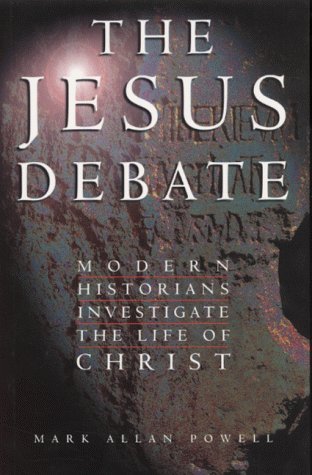
The latest issue of the new yorker includes an essay by adam gopnik, we're still not done with jesus, on the scholarly debates about the origins of christianity Biblical criticism and modern science mark harris biblical criticism and modern science are intertwined disciplines that emerged concurrently from the sixteenth to the twentieth centuries, primarily within european and north american christian contexts It is no accident that the birth and growth of the modern sciences took place in tandem with the birth and growth of modern biblical criticism. History is a broad discipline encompassing many branches
Some focus on specific time periods, such as ancient history, while others concentrate on particular geographic regions, such as the history of africa Thematic categorizations include political history, military history, social history, and economic history. These lingering questions about historical events still provoke heated debate — and insatiable curiosity. The term historical jesus refers to the life and teachings of jesus as interpreted through critical historical methods, in contrast to what are traditionally religious interpretations
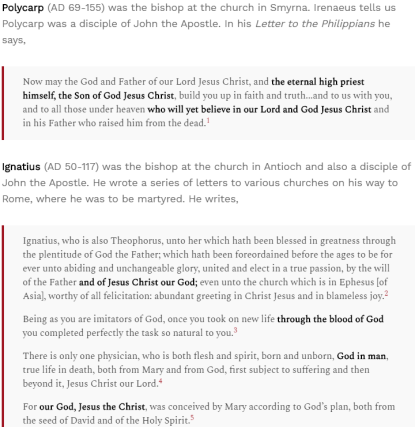
[1][2] it also considers the historical and cultural contexts in which jesus lived
Christianity began as a movement within judaism at a period when the jews had long been dominated culturally and politically by foreign powers and had found in their religion (rather than in their politics or cultural achievements) the linchpin of their community From amos (8th century bce) onward the religion of israel was marked by tension. Few events of european history have captured the sentiments of contemporaries and the imaginations of later observers more vividly than the series of christian wars now known as the crusades. For the historian, insurmountable difficulties surround jesus himself
Too little information about the actual man in his day can be verified and too many people care about the interpretation of christ's life and teaching, a situation which leaves historians with no real hope for achieving consensus The gospels themselves only exacerbate the problem, since they entail numerous difficulties. The flow of publications never abates and the debates refuse to settle, as each generation has its say. Christian theology includes the beliefs that jesus was conceived by the holy spirit, was born of a virgin named mary, performed miracles, founded the christian church, died by crucifixion as a sacrifice to achieve atonement for sin, rose from the dead on the third day, and ascended into heaven from where he will return.

Historical interpretation refers to the process of analyzing and understanding past events, figures, and societies through various lenses
It involves examining primary sources, contextual factors, and the perspectives of historians to develop a coherent narrative or understanding of history This process highlights how different viewpoints and contexts can influence the way history is. Whether jesus of nazareth truly walked the earth, or remains a figure lost to myth, has been a matter of debate for centuries Outside of the gospels, scant records survive to confirm his existence
While roman chroniclers mentioned him briefly, and jewish historians wrote of a crucified teacher whose followers stirred unrest, these fragments leave us with a puzzle The reformation has always been presented as one of the most crucial episodes of the early modern period, or even regarded as the event separating the modern era from the middle ages. The landscape of contemporary christianity is continually contoured by a variety of theological debates, which are deeply rooted in the faith's rich tapestry of history.