The Theological Strategy Behind Paul’s Famous Mars Hill Speech In Athens Visitg Areopagus Or Ans Greece
Conclusion mars hill stands as a timeless symbol of the intersection of faith and reason, idolatry and truth, divine revelation, and human search for meaning They inquire after new things The apostle paul's encounter with the athenians offers profound insights and practical lessons for today's believers in a world full of modern idols and diverse worldviews.
Visiting Areopagus Or Mars Hill In Athens Greece
The apostle paul's ministry was marked by tireless travel, fervent preaching, and profound theological insight Said, ye men of athens — giving them a lecture of natural divinity, with admirable wisdom, acuteness, fulness, and courtesy Among his many significant evangelistic encounters, his sermon on mars hill, or the areopagus, in athens stands out as a remarkable example of contextualized apologetics.
- Behind The Scenes Unexpected Global Partnerships Elevate Oakwood Vbs 2026 Experience
- The Holistic Care Philosophy Behind St Pauls House A Lutheran Life Community
- The Unseen Twist How Orphan First Kill Changed Its Original Ending
Theological significance paul's sermon on mars' hill is a masterful example of contextual evangelism
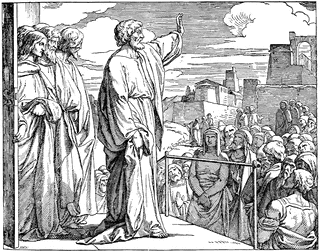
He acknowledges the athenians' religious nature and uses their own cultural references to reveal the truth of the gospel This approach highlights the importance of understanding and engaging with the cultural context when sharing the christian. Paul entered this area full of people and markets and spoke about jesus to the people there In paul's audacious leture at mars hill, he challenged leading philosophers to think more deeply about the most important part of life
In acts 17, paul engaged athens with wisdom and respect Learn how his mars hill approach models christian engagement in today's culture. It was here, at the areopagus hill (mars hill), that paul delivered one of his most famous sermons, bridging the gap between greek philosophy and christian theology. And then the major scene in this chapter, paul's visit to athens in which he engages in discussion on mars hill—one of the more famous speeches in acts where paul and the philosophers had their opportunity to exchange greetings and thoughts

As we look at the beginning of the chapter, it really flows in a fairly straightforward way.
The place where those in athens took the apostle paul was the summit of the hill of areopagus, where the most awful court of judicature had sat from time immemorial, to pass sentence on the greatest criminals, and to decide the most solemn questions connected with religion The judges of athens sat in the open air, upon seats hewn out in the rock, on a platform which was ascended by a flight. Athens was the most important cultural center of the ancient roman world Here paul delivered one of his justly celebrated speeches, an apologetic for christianity.
Culture is only one side of the equation, paul is clearly teaching biblical theology on mars hill While it is true that paul could stand in the aeropagus and discuss stoic and epicurean philosophy, and even cite greek poets, he cannot be confused with a greek philosopher. Paul's speech to the greek philosophers in athens takes up a space of just 11 verses, yet it has occupied theologians and missiologists for decades There is hardly a book on missions that does not use this story to support a variety of views on missiological theory and practice

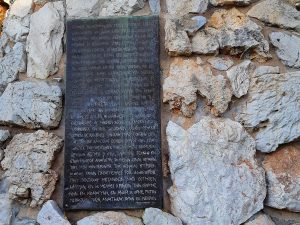
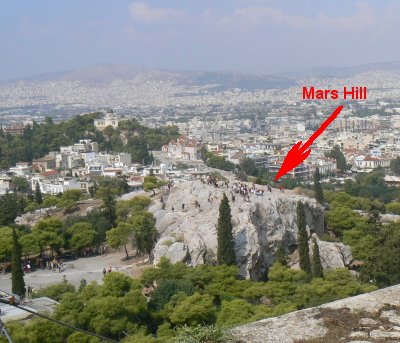
The areopagus, also known as mars hill, is a prominent rock outcropping located northwest of the acropolis in athens, greece
In ancient times, it served as the meeting place for the council of elders, known as the areopagite council, which was a significant judicial and legislative body in athens The name areopagus is derived from ares, the greek god of war, and pagos, meaning hill or. For while i was passing through and examining the objects of your worship, i also found an altar with this inscription, 'to an unknown god.' therefore, what you worship in ignorance, this i proclaim to you The god who made the world and.
We would like to show you a description here but the site won't allow us. This commentary on acts 17 treats paul's visit to athens and his sermon to the areopagus. The rest of paul's speech is a theological contruction of what he believes to be the ulitmate reality for which the greeks seek Paul names this unknown god as the one having made all things and lord of heaven and earth. paul names two important qualities of god

First, god cannot be contained in a box.
What i learned from reading acts 17 on mars' hill in athens, greece the apostle paul had the faith — and the audacity — to declare jesus christ's divinity in the face of ancient greek power A group of epicurean and stoic philosophers began to debate with him Some of them asked, what is this babbler trying to. Paul begins and ends his speech, for example, by mentioning the athenians' ignorance of the true god (see acts 17:23, 30)
While some philosophers such as socrates believed that those who claimed to have knowledge in reality did not, 3 most philosophers (such as those in paul's immediate presence) valued knowledge highly and confidently. Paul sent word with them that silas and timothy should come to him as soon as they could While paul was waiting for silas and timothy in athens, his spirit was troubled as he saw the whole city worshiping false gods He talked to the jews and other people who were worshiping in the.
David guzik commentary on acts 17 continues describing the second missionary journey which takes paul into thessalonica, berea, and athens.
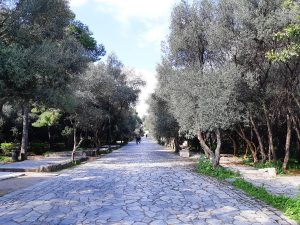
The site of the areopagus on mars hill, athens (acts 17:19) mars hill and the parthenon can still be visited today, as can the roman agora (the market place) with its bouleuterian (council chamber), the stoa of zeus, and its many pagan shrines, including the altar of the twelve gods, the magnificent temple of hephaestus and the altar of zeus. The unknown god by david padfield while on his second missionary journey, the apostle paul visited the city of troas on the mediterranean coast While in troas, paul saw a vision in the night, a man of macedonia stood and pleaded with him, saying, 'come over to macedonia and help us' (acts 16:9) Paul boarded a ship at troas, crossed the aegean sea and landed at neapolis, and from there.
Then paul stood (greek, σταθεις, standing, or being placed, rather, probably on some eminence) in the midst of mars hill — an ample theatre